Dive information

Cenote Dos Ojos dive info

Dos Ojos is a shallow, clear, highly visual cavern dive site near Tulum. It is famous, accessible, and still deserves careful guide selection and proper dive planning.

The system

Two eyes, one connected cavern zone.

Dos Ojos is part of a large flooded cave system north of Tulum. The two openings connect into a shared cavern area, creating the "Two Eyes" name and giving divers more than one way to experience the site.

Dos Ojos is often described as one of the best-known underwater cave systems in the region. The important practical point for visitors is simple: it is a serious natural site that can be enjoyed safely when treated with respect.

Who it suits

  • Certified divers trying cenote diving for the first time
  • Divers who want formations and clear water instead of a deep profile
  • Travelers staying in Playa del Carmen, Tulum, Akumal, or nearby Riviera Maya areas
  • Snorkelers who want a beautiful freshwater site without doing a cavern dive

Dive routes

Ask which route fits your experience.

Bat Cavern style route

Often described as one of the classic Dos Ojos experiences, with clear water, overhead views, and the famous cavern feeling that made the site known.

Barbie Line style route

A different route with its own formations and light. Many divers like doing two tanks at Dos Ojos because the routes do not feel identical.

Helpful hint

Propulsion technique for a better cenote dive.

One recommended technique for cavern and cave diving in the cenotes of the Riviera Maya is the modified flutter kick. The diver stays horizontal, looks forward, bends the knees, keeps the body stable, and moves mainly from the ankles in a relaxed alternating motion.

This helps reduce silting, protects the cenote floor, and keeps the dive more comfortable for everyone behind you.
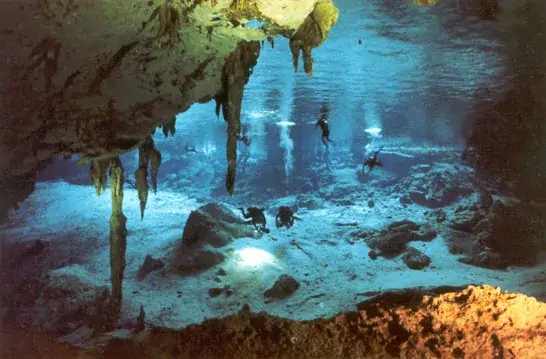
Divers swimming horizontally through clear Cenote Dos Ojos water

Modified flutter kick

Keep the movement small and controlled so the water stays clear and the formations stay protected.
Rules and conservation

Rules to follow for all cenote dives.

Cavern limits

  • No decompression diving
  • Maximum penetration: 200 ft / 60 m from the opening
  • Maximum depth: 70 ft / 21 m
  • Minimum visibility: 40 ft / 12.5 m
  • Large passages with no restrictions
  • Ceiling area with some visible light

Environmental concerns

Please help preserve these fragile cenotes. Dive gently.

  • Take nothing
  • Reduce drag from equipment
  • Do not grab or pull formations
  • Avoid touching or disturbing sediment

Buoyancy and signals

  • Minimize weight and check buoyancy before the dive
  • Stay neutrally buoyant
  • Kick gently from the knee and ankle, not the hip
  • Keep the body horizontal and slightly head down
  • Stay mid-water, off the bottom and ceiling
  • Your certified cave guide will review light and hand signals before the dive

Cave warning

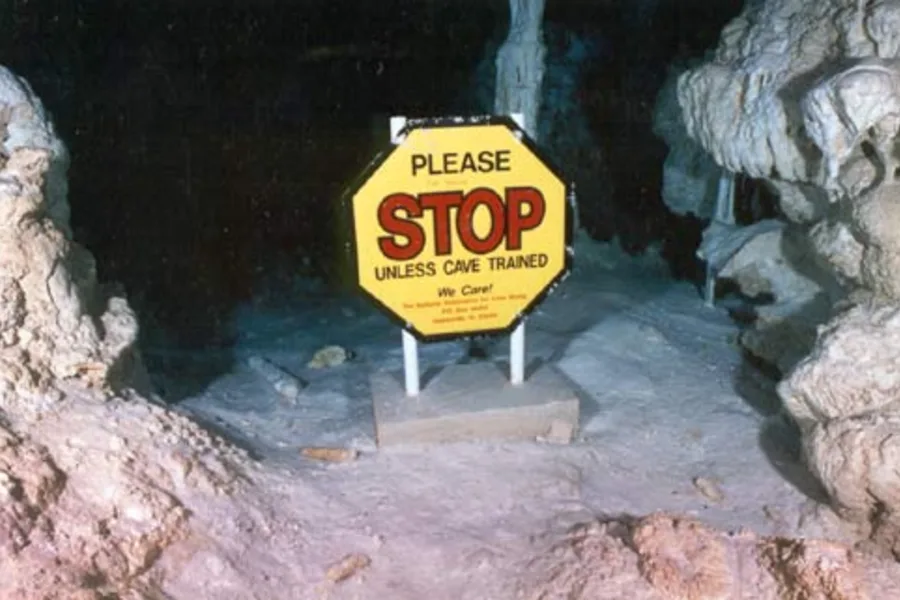
Do not pass warning signs unless you are cave trained.

The cavern tour is designed to stay within the safe cavern zone, where there is still visible light and a qualified guide manages the route. Beyond warning signs, the environment changes into cave diving. That requires proper cave training, redundant equipment, gas planning, and a different level of discipline.

If you are not cave trained, treat those signs as the end of the dive route. Stay with the guide, stay on the line, and do not follow another diver into a cave section.

Cave diving warning sign inside Cenote Dos Ojos

Respect the limit

Cenote diving is beautiful because the rules are taken seriously.

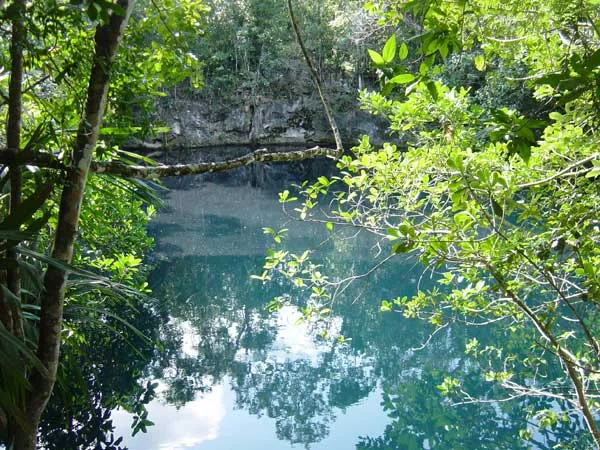
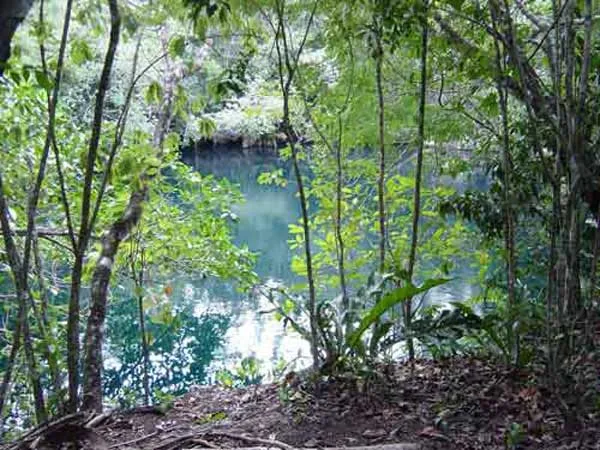
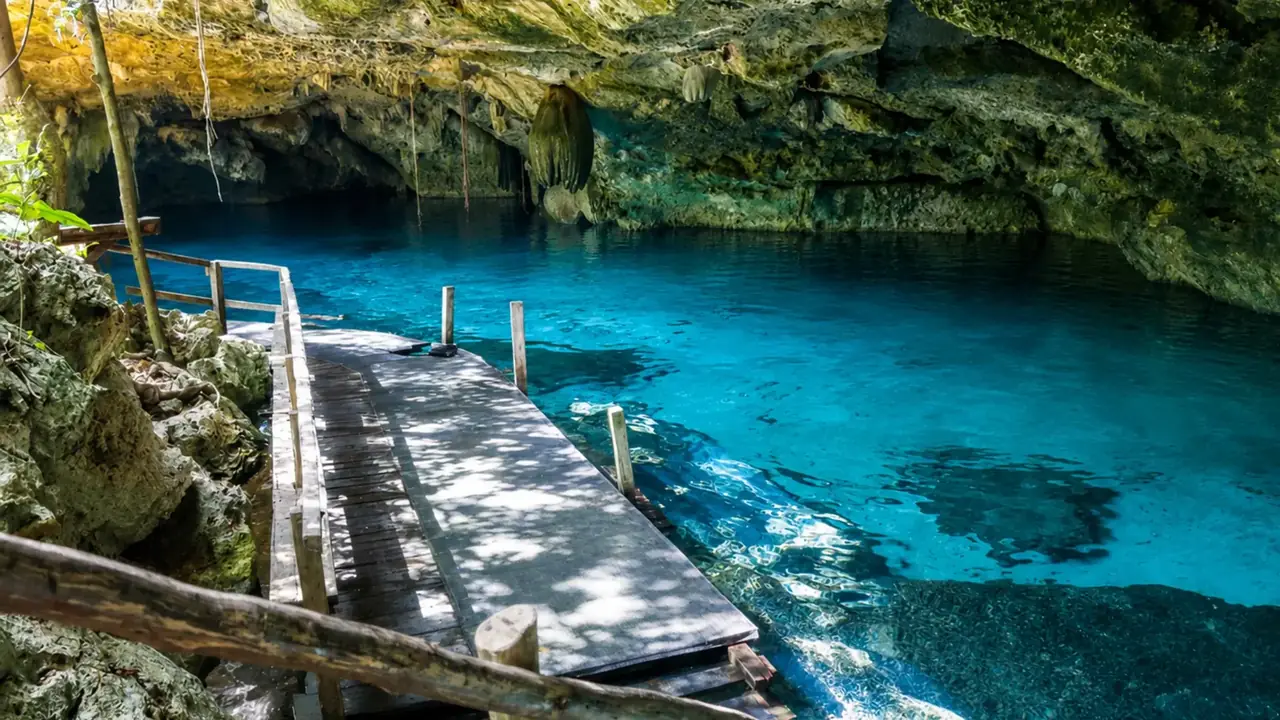
Clear blue cavern water and rock formations at Cenote Dos Ojos

Safety note

Cavern diving is not normal open-water diving.

Stay with the guide, remain within the cavern limits, manage buoyancy, avoid touching formations, and do not enter cave sections unless you are trained and properly equipped for cave diving.

If you want cave dives or cave training, ask clearly before booking. The right guide and plan matter more than rushing into a famous site.

More views

What makes Dos Ojos memorable.

Next step

Check maps or send your certification details.